Understanding Water Rescue Emergencies
 Water-related emergencies can escalate quickly, especially in rivers or areas with strong currents. A near-drowning occurs when a person is unable to stay above water or breathe effectively, often requiring immediate rescue and first aid.
In Canada, including Winnipeg and throughout Manitoba, rivers and lakes are widely used for recreation. This makes water safety awareness and CPR knowledge important for both the public and workplaces involved in outdoor or water-based activities.
First Aid & Workplace Relevance in Canada
Outdoor workers, recreational staff, and individuals near water—such as in tourism, construction, or parks—may face increased exposure to water hazards. In Winnipeg and surrounding communities, safety programs often include first aid and CPR training to help improve emergency response.
Being prepared to act quickly during a water emergency can help bridge the time before professional responders arrive.
A Realistic Scenario: Rapid Rescue on the Water
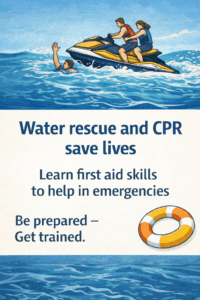
A man was participating in a water activity on a major river when he lost control of his equipment and fell into the water. Strong currents made it difficult for him to stay afloat or breathe.
Nearby individuals noticed signs of distress and alerted others in the area. Two people on personal watercraft quickly reached him and brought him out of the water with assistance from others nearby. Once on a stable surface, CPR was initiated as he was unresponsive.
Emergency services arrived shortly after and transported him for further care. The quick actions of those nearby played a key role in the response.
Recognizing Signs of Water Distress
A person in trouble in the water may show:
-
Difficulty staying afloat
-
Weak or irregular movements
-
Head low in the water or barely visible
-
Gasping or struggling to breathe
-
Unresponsiveness after rescue
Drowning is often quiet, making awareness especially important.
Causes and Risk Factors
Water emergencies may be linked to:
-
Strong currents or waves
-
Equipment failure
-
Cold water exposure
-
Fatigue or overexertion
-
Lack of flotation devices
In Canadian waterways, changing weather and water conditions can increase risk.
First Aid Response: Water Rescue and CPR
If someone is pulled from the water and is not breathing normally:
-
Call 911 immediately
-
Check responsiveness and breathing
-
Begin CPR if needed
-
Continue until emergency services arrive or the person shows signs of recovery
Rescue efforts should only be attempted if it is safe, as entering the water can pose risks to rescuers.
Prevention and Workplace Considerations
Improving water safety in Winnipeg and across Manitoba may include:
-
Wearing appropriate flotation devices
-
Checking equipment before use
-
Being aware of water conditions and currents
-
Avoiding activities alone in high-risk areas
-
Providing first aid and CPR training in water-related workplaces
Preparedness and awareness can help reduce the likelihood of emergencies.
Frequently Asked Questions
What should you do if someone is struggling in the water?
Alert emergency services and attempt a safe rescue without putting yourself at risk.
Is CPR always needed after a water rescue?
CPR may be required if the person is not breathing normally after being removed from the water.
Why are rivers more dangerous than they appear?
Rivers can have strong currents, cold temperatures, and changing conditions that are not always visible.
Can flotation devices help prevent emergencies?
Yes, wearing proper flotation equipment can improve safety during water activities.
Why is first aid training important for water activities?
It prepares individuals to respond quickly and effectively in unexpected situations.
Educational Note
This article is for general awareness and education. First aid and CPR training can help individuals respond more effectively to water-related emergencies.
About The Author

Mark Kascha
Certified First Aid Instructor Trainer with 30+ years of real-world experience, including lifeguarding, workplace emergency response, and first aid program development across Canada. Has worked with WorkSafeBC, WSIB, and Manitoba Health.
👉 [View full credentials]🔗 View LinkedIn Profile
Last reviewed: March 2026