Understanding Infant Cardiac and Breathing Emergencies
 Infants can experience breathing emergencies or cardiac arrest when their airway becomes blocked or their breathing stops. These situations can develop quickly and require immediate attention.
In Canada, including Winnipeg and across Manitoba, awareness of infant CPR and emergency response is an important part of first aid education for parents, caregivers, and workplaces that interact with children.
First Aid & Workplace Relevance in Canada
Childcare centres, family-oriented workplaces, and public spaces in Winnipeg and surrounding communities may encounter infant emergencies. Many organizations include pediatric first aid and CPR training as part of their safety programs.
Having individuals trained in infant CPR can help provide immediate support while waiting for emergency services.
A Realistic Scenario: Community Response in an Emergency
An infant experienced a sudden breathing emergency while in a vehicle. People nearby quickly noticed something was wrong and stopped to help.
Bystanders called 911 and received CPR instructions from a dispatcher. Individuals with first aid training stepped in to assist, taking turns performing CPR. Additional help arrived with specialized equipment to support the infant’s breathing until paramedics reached the scene.
The coordinated response—from bystanders, dispatchers, and emergency personnel—highlighted how early action and shared knowledge can support emergency care.
Recognizing Signs of Infant Distress
An infant in distress may show:
-
No breathing or abnormal breathing
-
Limp or unresponsive body
-
Change in skin colour (pale or bluish tone)
-
Weak or no movement
Recognizing these signs early is critical for taking action.
Causes of Infant Cardiac or Breathing Emergencies
Possible causes may include:
-
Airway obstruction
-
Respiratory illness
-
Congenital conditions
-
Sudden medical events
In many cases, the exact cause may not be immediately clear, which is why prompt response is important.
First Aid Response: Infant CPR Basics
If an infant is not breathing normally:
-
Call 911 immediately or ask someone to call
-
Begin infant CPR:
-
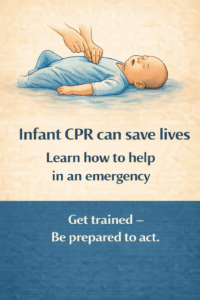
Use gentle chest compressions with two fingers
-
Deliver compressions in the centre of the chest
-
-
Follow dispatcher instructions if available
-
Continue until help arrives or the infant shows signs of recovery
Infant CPR techniques are specifically adapted for smaller bodies and are taught in certified courses across Canada.
Prevention and Safety Considerations
Improving infant safety in Canadian settings may include:
-
Learning infant CPR and first aid
-
Supervising infants closely in all environments
-
Being aware of choking hazards
-
Ensuring caregivers and staff are trained
In Winnipeg and throughout Manitoba, these measures are part of broader community safety awareness.
Frequently Asked Questions
What is different about infant CPR compared to adult CPR?
Infant CPR uses gentler compressions with two fingers and adjusted techniques for a smaller body.
Can bystanders perform infant CPR without training?
Dispatchers can guide individuals through the steps until trained responders arrive.
Why is early CPR important for infants?
Quick action helps support breathing and circulation during critical moments.
What are common signs of an infant emergency?
Unresponsiveness, abnormal breathing, and colour changes are key warning signs.
Who should learn infant CPR?
Parents, caregivers, and anyone working with children can benefit from this training.
Educational Note
This article is for general awareness and education. First aid and CPR training can help individuals respond more effectively to emergencies involving infants and children.
About The Author

Mark Kascha
Certified First Aid Instructor Trainer with 30+ years of real-world experience, including lifeguarding, workplace emergency response, and first aid program development across Canada. Has worked with WorkSafeBC, WSIB, and Manitoba Health.
👉 [View full credentials]🔗 View LinkedIn Profile
Last reviewed: March 2026