
Understanding Water Risks at Beaches
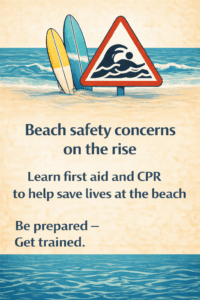 Coastal environments can present unpredictable risks, including strong waves, cold water, and changing currents. Even experienced swimmers or surfers can encounter difficulty in these conditions. When someone becomes unconscious in the water, immediate rescue and first aid—such as CPR—may be required.
In Canada, including Winnipeg and across Manitoba, many people travel to lakes and coastal areas for recreation. Understanding water safety and emergency response is an important part of staying safe.
First Aid & Workplace Relevance in Canada
Water safety is not only relevant for recreational settings but also for workplaces connected to tourism, parks, and outdoor activities. In Winnipeg and surrounding communities, safety planning often includes first aid training to prepare individuals for unexpected emergencies.
Whether at a job site near water or during personal activities, knowing how to respond can make a meaningful difference.
A Realistic Scenario: Coastal Emergency Response
At a popular Canadian beach known for surfing, a person encountered difficulty in the water and became unresponsive. Nearby individuals recognized the situation and quickly brought the person to shore.
Bystanders began CPR while emergency services were contacted. Despite efforts at the scene, the incident raised broader concerns about safety measures, supervision, and public awareness at busy recreational locations.
This type of situation highlights how quickly water conditions can change and the importance of both prevention and preparedness.
Recognizing Signs of Water Distress
A person in trouble in the water may show:
-
Difficulty staying afloat
-
Weak or irregular movements
-
Head low in the water
-
Gasping or struggling to breathe
-
Unresponsiveness after rescue
Early recognition allows for faster intervention.
Causes and Risk Factors at Beaches
Common contributing factors include:
-
Strong waves or rip currents
-
Cold water exposure
-
Slippery surfaces or sudden drop-offs
-
Fatigue during swimming or surfing
-
Lack of supervision or lifeguards
These risks can be present at beaches across Canada, especially in open water environments.
First Aid Response: Drowning and CPR
If someone is removed from the water and is not breathing normally:
-
Call 911 immediately
-
Check responsiveness and breathing
-
Begin CPR if needed
-
Continue until emergency services arrive or the person shows signs of recovery
Rescue should only be attempted if it is safe to do so.
Prevention and Safety Considerations
Improving beach safety may include:
-
Following posted safety signs and warnings
-
Being aware of weather and water conditions
-
Avoiding swimming alone
-
Wearing appropriate safety gear when needed
-
Learning CPR and first aid
In Canadian settings, including lakes and rivers around Winnipeg, these precautions can help reduce risk.
Frequently Asked Questions
Why are beaches sometimes dangerous even for experienced swimmers?
Conditions such as currents, waves, and cold water can change quickly and are not always predictable.
What should you do if someone is pulled from the water?
Call emergency services and begin first aid, including CPR if needed.
Are lifeguards always present at beaches in Canada?
Not all beaches have lifeguards, so personal awareness and preparation are important.
How can people reduce their risk at beaches?
By following safety guidelines, staying alert to conditions, and avoiding risky situations.
Why is CPR training important for water activities?
It prepares individuals to respond quickly during emergencies where every minute matters.
Educational Note
This article is for general awareness and education. First aid and CPR training can help individuals respond more effectively to water-related emergencies.
About The Author

Mark Kascha
Certified First Aid Instructor Trainer with 30+ years of real-world experience, including lifeguarding, workplace emergency response, and first aid program development across Canada. Has worked with WorkSafeBC, WSIB, and Manitoba Health.
👉 [View full credentials]🔗 View LinkedIn Profile
Last reviewed: March 2026