Understanding Heart Attacks and Cardiac Arrest
A heart attack occurs when blood flow to part of the heart is blocked, while cardiac arrest happens when the heart suddenly stops beating effectively. Knowing what to do if someone collapses during exercise or how to respond when a person is unresponsive and not breathing normally is critical.
In Winnipeg, Manitoba, and across Canada, early recognition, CPR, and rapid AED use can significantly improve survival.
First Aid & Workplace Relevance in Canada
 Heart-related emergencies can happen in gyms, workplaces, and public facilities across Winnipeg neighbourhoods such as Downtown, St. Vital, and Transcona.
Training is important for:
- Fitness staff and gym users
- Workplace employees
- Coaches and instructors
- General public and families
Programs such as CPR training Winnipeg, AED training Winnipeg, and first aid certification Manitoba help individuals respond quickly and confidently.
Real-Life Scenario: Rapid Response Saves a Life in Abbotsford
At Abbotsford Recreation Centre, a middle-aged man collapsed shortly after finishing a workout.
Bystanders, including Brian Wiens and off-duty paramedic Jim Earle, quickly assessed the situation and began CPR.
Additional trained individuals, including nurses and a corrections officer, assisted. An AED (Lifepak) was used, delivering a shock that restored a pulse.
According to Jennifer Thornton, the presence of trained responders and equipment made a critical difference. The patient regained consciousness before being transported to hospital and later recovered.
Heart Attack vs. Cardiac Arrest
Understanding the difference is important:
- Heart Attack: Blood flow blockage to the heart
- Cardiac Arrest: Electrical malfunction causing the heart to stop
A heart attack can sometimes lead to cardiac arrest, which requires immediate CPR and AED use.
Signs and Symptoms of a Heart Attack
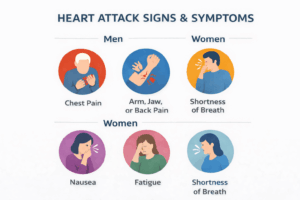
Common Symptoms (Often Reported by Men)
- Chest pain or pressure
- Pain spreading to arm, jaw, or back
- Shortness of breath
Symptoms That May Be More Common in Women
- Nausea or vomiting
- Unusual fatigue
- Shortness of breath
- Back or jaw pain
- Lightheadedness
Symptoms can vary, and not all cases present the same way.
Warning Signs of Cardiac Arrest
- Sudden collapse
- Unresponsiveness
- No normal breathing
Immediate action is required.
First Aid Response: What to Do
Based on standard first aid training practices in Canada:
- Call 911 immediately
- Check responsiveness and breathing
- Start CPR right away
- Send someone to get an AED
- Use the AED as soon as it is available
- Continue CPR until help arrives
These steps are commonly taught in certified CPR courses across Canada.
The Role of CPR and AED in Survival
- CPR helps circulate oxygenated blood
- AEDs analyze heart rhythm and deliver a shock if needed
- AEDs provide voice instructions, guiding rescuers step-by-step
- AEDs will not deliver a shock unless appropriate, making them safe for public use
Early use of both significantly improves outcomes.
Heart Attack Prevention and Risk Reduction
In Winnipeg and across Manitoba, prevention strategies include:
- Staying physically active
- Eating a balanced diet
- Managing stress
- Avoiding smoking
- Monitoring blood pressure and cholesterol
Regular check-ups and awareness help reduce risk.
Frequently Asked Questions
What should you do if someone has chest pain?
Call 911 immediately and monitor the person closely. Be ready to provide CPR if they become unresponsive.
How do heart attack symptoms differ between men and women?
Men often report chest pain, while women may experience fatigue, nausea, or shortness of breath.
When should CPR be started?
CPR should begin if the person is unresponsive and not breathing normally.
How does an AED help during cardiac arrest?
It analyzes heart rhythm and can deliver a shock to restore a normal heartbeat.
Can someone survive cardiac arrest?
Yes, especially with early CPR and AED use.
Educational Note
This article is for general awareness and reflects techniques commonly taught in certified CPR and AED training across Canada. Early recognition and rapid response are key to improving survival.
About The Author

Mark Kascha
Certified First Aid Instructor Trainer with 30+ years of real-world experience, including lifeguarding, workplace emergency response, and first aid program development across Canada. Has worked with WorkSafeBC, WSIB, and Manitoba Health.
👉 [View full credentials]🔗 View LinkedIn Profile
Last reviewed: March 2026