Understanding Cardiac Arrest in Children
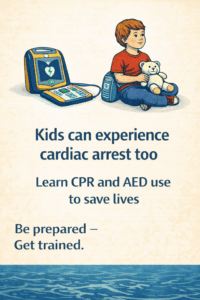 Cardiac arrest occurs when the heart suddenly stops beating effectively, preventing blood and oxygen from reaching vital organs. While often associated with adults, cardiac arrest can also affect children—especially those with underlying heart conditions.
In Canada, including Winnipeg and across Manitoba, awareness of CPR and AED use in schools, homes, and workplaces is an important part of emergency preparedness for people of all ages.
First Aid & Workplace Relevance in Canada
Childcare centres, schools, and family-oriented workplaces in Winnipeg and surrounding communities may encounter pediatric emergencies. Having trained staff and accessible equipment, such as automated external defibrillators (AEDs), can support faster response times.
Many Canadian workplaces and schools incorporate CPR and AED training into their safety programs to help ensure readiness in unexpected situations.
A Realistic Scenario: Prepared Families and Communities
A young child with a known heart condition lives with an increased risk of sudden cardiac arrest. His caregivers are trained in CPR and keep an AED nearby as part of their daily routine.
As the child prepares to attend school, teachers and staff take steps to learn CPR and understand how to respond in an emergency. This shared awareness helps create a safer environment where multiple people are prepared to act if needed.
This scenario reflects how preparation and education can extend beyond the home into schools and communities.
What Is Long QT Syndrome?
Long QT syndrome is a condition that affects the heart’s electrical system. It can cause irregular heart rhythms, which may increase the risk of fainting or cardiac arrest.
While not all individuals with this condition experience emergencies, awareness and preparedness are important for those at higher risk.
Recognizing Cardiac Arrest in Children
Signs may include:
-
Sudden collapse
-
Unresponsiveness
-
No normal breathing or only gasping
-
Seizure-like activity in some cases
Immediate action is important in these situations.
First Aid Response: CPR and AED Use
If a child collapses and is not breathing normally:
-
Call 911 immediately
-
Begin CPR with chest compressions
-
Ask someone to bring an AED if available
-
Follow AED voice prompts
-
Continue until help arrives or the child shows signs of recovery
AEDs are designed to guide users and can be used in pediatric emergencies with appropriate settings or pads.
Prevention and Workplace / School Considerations
Improving safety for children in Canadian settings may include:
-
CPR and AED training for school staff
-
Emergency response planning in schools and childcare centres
-
Accessible AED placement
-
Communication of medical needs when appropriate
In Winnipeg and across Manitoba, these measures are part of broader community safety efforts.
Frequently Asked Questions
Can children experience cardiac arrest?
Yes, although less common than in adults, children can experience cardiac arrest, especially with certain medical conditions.
What is an AED used for?
An AED analyzes heart rhythm and can deliver a shock to help restore a normal heartbeat.
Should schools have CPR-trained staff?
Many schools encourage or require staff training to improve emergency preparedness.
Is CPR different for children?
Techniques are similar but may be adapted based on the child’s size and age in formal training.
Why is early response important?
Quick action with CPR and AED use can improve outcomes during cardiac emergencies.
Educational Note
This article is for general awareness and education. First aid and CPR training can help individuals respond more effectively to emergencies involving both children and adults.
About The Author

Mark Kascha
Certified First Aid Instructor Trainer with 30+ years of real-world experience, including lifeguarding, workplace emergency response, and first aid program development across Canada. Has worked with WorkSafeBC, WSIB, and Manitoba Health.
👉 [View full credentials]🔗 View LinkedIn Profile
Last reviewed: March 2026