Understanding Severe Bleeding and Emergency Response
Violent incidents involving sharp objects can result in life-threatening injuries within minutes. Knowing what to do if someone is seriously bleeding or how to respond when multiple people are injured is critical for bystanders before emergency services arrive.
In Winnipeg, Manitoba, and across Canada, first aid training emphasizes scene safety, bleeding control, and CPR to improve outcomes during high-risk emergencies.
First Aid & Workplace Relevance in Canada
Incidents like this can occur in public spaces such as parks, campgrounds, festivals, and workplaces across Winnipeg neighbourhoods like Downtown, St. Vital, and Transcona.
Training is especially important for:
-
Security staff and supervisors
-
Outdoor workers and park personnel
-
Event staff and volunteers
-
Teachers and community leaders
Programs such as CPR training Winnipeg, first aid certification Manitoba, and emergency response training Canada prepare individuals to manage both single and multiple casualty situations.
Real-Life Scenario: Patrolman Injured While Providing First Aid at Cultus Lake
 At Cultus Lake Campground during the Victoria Day long weekend, park patrolman Ryan Litchfield responded to a disturbance involving two groups of young men.
Initially, he attempted to de-escalate the situation and encouraged the groups to leave. However, tensions escalated and a fight broke out.
When one individual was attacked with a weapon, Litchfield intervened and physically separated the attacker from the victim. He immediately began providing first aid.
Moments later, a second person was attacked. Litchfield again stepped in to stop the assault. During this intervention, he was injured but continued to assist others.
Despite his efforts, 19-year-old Cody Gottschalk could not be revived, even after extended CPR.
Authorities later recognized Litchfield’s actions as preventing further harm and potentially saving another life.
This incident highlights both the importance of first aid—and the risks involved when responders enter unsafe scenes.
Symptoms and Warning Signs of Severe Injury
In violent injury situations, signs that require immediate action include:
-
Heavy or uncontrolled bleeding
-
Unresponsiveness
-
Difficulty breathing
-
Visible wounds or embedded objects
-
Signs of shock (pale skin, weakness, confusion)
Quick recognition allows faster intervention.
Causes and Risk Factors
Situations involving violence or sharp objects may result in:
-
Deep lacerations (cuts)
-
Penetrating injuries
-
Multiple casualties
-
Emotional stress and chaotic environments
These conditions require both scene awareness and structured response.
First Aid Response: What to Do
Based on standard first aid training practices in Canada:
-
Ensure scene safety first (do not enter if danger is ongoing)
-
Call 911 immediately
-
Prioritize the most critical injuries
-
Control severe bleeding using direct pressure
-
Begin CPR if someone is unresponsive and not breathing normally
-
Continue care until emergency responders arrive
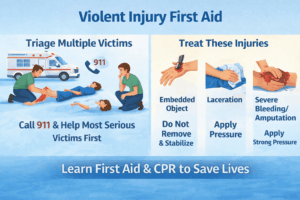
Triage: Managing Multiple Victims
When more than one person is injured, responders must quickly prioritize care. This is known as triage.
General principles include:
-
Help those with life-threatening bleeding first
-
Check breathing and responsiveness
-
Focus on victims who can benefit from immediate intervention
-
Call for additional help and direct others if possible
Triage is commonly introduced in workplace and advanced first aid training across Canada.
Managing Specific Injuries
Embedded Objects
-
Do not remove objects stuck in a wound
-
Apply pressure around the object to control bleeding
-
Keep the object stable until help arrives
Lacerations (Deep Cuts)
-
Apply firm, direct pressure with cloth or bandage
-
Maintain pressure until bleeding slows or stops
-
Monitor for signs of shock
Severe Bleeding or Amputation
-
Apply strong, continuous pressure to the wound
-
Use available materials to control bleeding
-
If an amputation occurs, focus on the injured person first and keep them stable
These approaches are commonly taught in certified first aid courses across Canada.
Prevention and Workplace Safety Considerations
In Winnipeg and across Manitoba, safety planning can reduce risks in public and workplace settings:
-
Train staff in first aid and CPR
-
Develop emergency response plans for public events
-
Encourage early reporting of conflicts or unsafe behaviour
-
Ensure clear communication systems for emergencies
-
Promote situational awareness and personal safety
Prepared individuals are better equipped to respond effectively.
Frequently Asked Questions
What should you do if there are multiple injured people?
Focus on the most serious injuries first, especially severe bleeding or unresponsiveness. Call 911 and direct others to assist if possible. Triage helps prioritize care in these situations.
Should you remove an object stuck in a wound?
No, embedded objects should not be removed. They may be limiting bleeding. Stabilize the object and apply pressure around it until help arrives.
How do you control heavy bleeding?
Apply firm, direct pressure using cloth or bandages. Continuous pressure is key. This is one of the most important skills taught in first aid training.
Is it safe to intervene in violent situations?
Your safety comes first. Only intervene if it is safe to do so. Waiting for authorities may be necessary if danger is ongoing.
Why is CPR important in trauma situations?
If a person becomes unresponsive and stops breathing, CPR may help maintain circulation until emergency services arrive.
Educational Note
This article is for general awareness and reflects techniques commonly taught in certified first aid and CPR training across Canada. Scene safety and prioritization are essential in emergency response.
About The Author

Mark Kascha
Certified First Aid Instructor Trainer with 30+ years of real-world experience, including lifeguarding, workplace emergency response, and first aid program development across Canada. Has worked with WorkSafeBC, WSIB, and Manitoba Health.
👉 [View full credentials]🔗 View LinkedIn Profile
Last reviewed: March 2026