Understanding Boating Emergencies and CPR Response
Boating emergencies can develop quickly, especially when a vessel begins taking on water. Knowing what to do if a boat starts sinking or how to respond when someone is pulled from cold water and not breathing normally is critical for survival.
In Winnipeg, Manitoba, and across Canada, lakes and waterways are widely used for recreation. Quick action—including calling for help, staying afloat, and starting CPR when needed—can make a life-saving difference.
First Aid & Workplace Relevance in Canada
Boating incidents are not limited to coastal regions. In Winnipeg and throughout Manitoba, similar risks exist on lakes, rivers, and cottage waterways.
Boating safety and CPR training are important for:
-
Recreational boaters and anglers
-
Outdoor workers and guides
-
Families and cottage owners
-
Marina and transport staff
Courses such as CPR training Winnipeg, first aid certification Manitoba, and water safety training Canada prepare individuals to respond to emergencies on the water.
Real-Life Scenario: Ferry Crew Performs CPR After Sinking Boat Rescue
Off the coast of British Columbia near Bowen Island, a 30-year-old man experienced a life-threatening boating emergency when his powerboat began taking on water.
He had reportedly been resting when he was alerted by the vessel’s bilge alarm. Realizing the severity of the situation, he issued a distress call.
As the boat continued to sink, he abandoned the vessel and managed to stay afloat by holding onto a crate.
Nearby, the Queen of Cowichan ferry, traveling from Nanaimo, altered its course to assist. Additional help came from a tugboat in the area.
By the time rescuers reached him, the 11.5-meter powerboat was mostly submerged.
Ferry workers pulled the man from the water and immediately began CPR. He was later transferred to a coast guard hovercraft and transported for further care.
The man was treated for hypothermia and survived the incident, highlighting how rapid rescue and CPR can improve outcomes.
Symptoms and Warning Signs After Water Exposure
After being rescued from cold water, signs of a serious emergency may include:
-
Unresponsiveness
-
Slow or irregular breathing
-
Shivering or loss of coordination
-
Confusion or disorientation
-
Pale or cold skin
These symptoms may indicate hypothermia or other life-threatening conditions.
Causes and Risk Factors
Boating emergencies can result from:
-
Equipment failure (e.g., bilge issues)
-
Weather or water conditions
-
Lack of safety preparation
-
Fatigue or inattention
-
Cold water exposure
Even experienced boaters can face unexpected situations.
First Aid Response: What to Do
Based on standard first aid training practices in Canada:
-
Call for emergency assistance immediately
-
Remove the person from the water safely
-
Check responsiveness and breathing
-
Begin CPR if unresponsive and not breathing normally
-
Protect from cold exposure (keep warm if possible)
-
Monitor until emergency services arrive
These steps are commonly taught in CPR and first aid courses across Canada.
Boating Safety: What to Do Before You Leave
 Preparation is one of the most important safety steps.
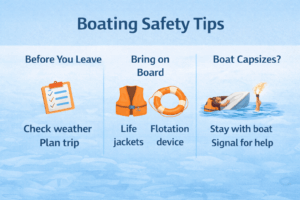
Before heading out on the water:
-
Check weather and water conditions
-
File a trip plan with someone on land
-
Inspect your boat (fuel, bilge, engine, battery)
-
Ensure communication devices are working
-
Wear or bring properly fitted life jackets for all passengers
Planning ahead reduces the risk of emergencies.
What to Bring on a Boat
Basic boating safety equipment should include:
-
Approved life jackets for everyone on board
-
A throwable flotation device
-
Emergency signaling devices (whistle, flares)
-
Waterproof communication device (radio or phone)
-
First aid kit
-
Extra clothing or thermal protection
-
Bailer or pump
These items are commonly recommended in Canadian boating safety guidelines.
What to Do If Your Boat Capsizes
If a boat capsizes or begins sinking:
-
Stay calm and stay with the boat if possible (it is easier to locate)
-
Use flotation devices to stay above water
-
Signal for help using visible or audible methods
-
Conserve energy and body heat
-
Avoid swimming long distances unless necessary
Cold water can quickly lead to exhaustion and hypothermia, making flotation and visibility critical.
Prevention and Workplace Safety Considerations
In Winnipeg and across Manitoba, boating safety can be improved by:
-
Taking boating and first aid training
-
Wearing life jackets at all times
-
Avoiding boating alone when possible
-
Maintaining equipment regularly
-
Understanding local water conditions
Prepared boaters are better equipped to prevent and respond to emergencies.
Frequently Asked Questions
What should you do if a boat starts sinking?
Call for help immediately, put on a life jacket, and prepare to abandon the vessel if needed. Stay with the boat if possible, as it is easier for rescuers to locate.
Can CPR help after someone is pulled from water?
CPR may help if the person is unresponsive and not breathing normally. Early intervention is commonly taught in CPR training and can improve survival chances.
Why is staying with the boat important after capsizing?
A capsized boat is easier to see than a person in the water. Staying nearby increases the chances of being located quickly by rescuers.
What is the biggest risk after falling into cold water?
Hypothermia is a major risk. Cold water can quickly affect breathing, movement, and awareness, making it harder to stay afloat and signal for help.
Why is boating safety training important?
Training helps individuals prepare for emergencies, understand risks, and respond effectively. Many incidents can be prevented with proper knowledge and preparation.
Educational Note
This article is for general awareness and reflects techniques commonly taught in certified first aid and CPR training across Canada. Preparedness and early response are key to boating safety.
About The Author

Mark Kascha
Certified First Aid Instructor Trainer with 30+ years of real-world experience, including lifeguarding, workplace emergency response, and first aid program development across Canada. Has worked with WorkSafeBC, WSIB, and Manitoba Health.
👉 [View full credentials]🔗 View LinkedIn Profile
Last reviewed: March 2026